Author: Ben Saunders

  • A Record Breaking Summer for Solar Power

    A Record Breaking Summer for Solar Power

    June was a scorcher, one of the UK’s hottest ever. It led to solar power breaking all records and providing a quarter of the country’s electricity:

    • On 7 June, renewables generated more electricity than coal and gas for the first time ever in Britain – 50.7%. Include nuclear and low carbons and this figure rises to 72.1%.

    According to National Grid, days before on 26 May, Photovoltaic panels generated 8.7GW of demand, beating the previous high of 8.48GW.

    It’s been a good year. Cast your mind back to March and Britain didn’t use coal to generate electricity for a whole day – a first since the 1880s.

    Summer case study

    In light of all this positive news, we caught up with one of Sogosolar’s customers, Dr Sethurajan to see how the family’s summer is going, and what life’s been like since their first installation over six years ago.

    “We’re self-sufficient until around 4am for everything electrical from March to September.” – Dr Sethurajan, 47, London.

    “We had our first solar set up in 2011. The tariffs were higher then but we saw how much you can generate and save. When we moved to a slightly larger property we
    realised we could install a bigger array of solar panels and be more or less self-sufficient.
    “We’re a family of four with two children aged 11 and 12. We run typical large appliances everyday including a fridge, freezer, washing machine, dishwasher, TVs,
    computers – and a fish tank. We generate our own hot water from the solar and now have a hybrid car that plugs in too.

    You just leave it alone and it does its thing
    “We started with 12 panels on the garage roof and were actually producing more than we could use during the day, which was better than we expected.
    “When we decided on a loft extension the scaffolding was already in place so we added a second set of panels.
    “There was hardly any disruption during installation. It took a day to fix the panels and another day to connect the wiring, cabling, electronics and stuff to the main fuse board. The beauty is it’s also virtually maintenance free, it really is fit and forget. You just leave it alone and it does its thing.
    “The kids see the solar panels, know why we’re running stuff during the day and how we’re trying to cut down on pollution and they love it, they think it’s normal, which is the way it should be.

    No electricity bills for three quarters of the year
    “We recently added a Tesla battery in our garage. The battery holds around 6kW, which is pretty much what we use at night.
    “We’ve gone from generating solar energy, to generating our own electricity, to now storing and using it overnight. It’s a complete package. Environmentally, it’s great because the extra energy we generate during the day but don’t use goes back into the battery. When the sun goes down, the battery takes over. That means we’re self-sufficient until around 4am everyday for everything electrical from March to September.
    “There’s no change to your experience as a user. Say the panels weren’t generating anything and the battery was flat, the system automatically takes electricity from the grid because we’re still connected. We don’t notice any difference except we’ve got no electricity bills for three quarters of the year.
    We also get £300 to £400 a year guaranteed for 20 years from the government as the solar tariff but as well as that, save at least £70 a month on bills and consume
    virtually no gas for most of the year.
    “I don’t panic every time there’s a rise in gas or electricity prices and only go to a petrol station once a month since I’ve bought a hybrid car. I do a lot of stop start driving and with the hybrid the first 30 miles are all electric. It’s a silent ride and I really enjoy it. The kids think it’s cool.

    It’s for the kids and the next generation. It is important
    “I am environmentally aware and don’t like waste. This is a long-term investment, I’ve spent about £17K including the battery and 22 solar panels. We’d do it all again. The technology is getting better all the time. And Ben is a real star, so passionate about what he does and the whole ethos, I can’t praise him enough.
    “When we first went solar it did feel a bit sci fi but I really like the fact we are less dependent not just on the grid but also on fossil fuels. It’s for the kids and the next generation, it is important.”

    To find out more on how a combined solar + battery system could work for you please call us on 0800 0025833 or email us at: info@sogosolar.co.uk

    Sunny Stats

    Energy production, consumption and generation at Dr Sethurajan’s home from midnight on 19 June to 23:59.

    Green= solar power
    Light blue = appliances running in the house met by solar power
    Dark Blue = battery power
    Red = grid power

    Monthly electricity consumption at Dr Sethurajan’s home from October 2016 – June 2017 showing % of energy met by solar + battery v. purchased from grid.

    The property is 90% self sufficient during summer months.

    Click here to view our information sheet about this installation

  • Get your grid on: power up the solar power storage battery

    Get your grid on: power up the solar power storage battery

    The concept of clean green electricity from your own home power station once seemed a fanciful dream world, featuring cars that didn’t use petrol and a hand held super computer to check energy consumption from anywhere on the planet.

    This future is now reality, thanks to advances in lithium ion batteries and innovators like billionaire Elon Musk of Tesla Motors, the US electric car manufacturer.

    His company has evolved from an electric vehicle (EV) manufacturer, harnessing the same Lithium ion battery technology, to create the ‘Powerwall’, which Musk describes as a “fundamental transformation (in) how energy is delivered across the earth”.

    solar power storage batteryTesla’s Powerwall is a neat white cabinet, resembling a slim line central heating boiler. It stores energy from solar panels and the night-time grid for use during peak demand hours. It can also take charge from the grid at night, via cheap ‘time of use’ tariffs’, to supplement solar in winter months. It’s a practical and economic way to keep the lights on (and more), save money and reduce your carbon footprint.

    Green electricity storage is the golden ticket of renewables. “Storage is the game-changer for the way the British power market works over the next decade,” said Simon Virley, chairman of KPMG’s energy practice. “With widespread deployment of storage, you no longer need power stations to be available for the tea-time peak in demand.”

    The billionaire Musk undoubtedly likes to think big and is so far delivering. “Tesla is amplifying its efforts to accelerate the move away from fossil fuels to a sustainable energy future with Tesla batteries,” Musk said, “enabling homes, business, and utilities to store sustainable and renewable energy to manage power demand, provide back-up power and increase grid resilience.”

    The Tesla solar power storage battery is built at a modestly named “gigafactory” in Nevada. The car industry’s positivity towards electric vehicles has been the prime mover in dramatically bringing down battery costs, paving the way for many families to go off grid.

    Size matters

    When you think about a solar power storage battery powering your house, people often imagine something the size of a small car. Not so. Tesla batteries are genuinely compact with proven technology and reliability in one small package. “You don’t need a battery room…A normal household can mount this on their garage or the outside wall of their house and it doesn’t take up any room. It’s flat against the wall,” Musk reassures.

    According to IHS Cambridge Energy Research Associates, general energy storage is expected to reach £12.4bn in 2017.

    North and south pioneers

    South Yorkshire isn’t normally known for its sunshine but some council houses in Oxspring near Barnsley are already quietly making history. In a £250,000 pilot with Northern Powergrid, lithium ion batteries are storing energy from solar panels for electricity use in the evenings.

    In the south west, Glastonbury is pioneering a different kind of power station based on a solar power storage battery power grid at a solar park run by RES, a company with
    80MW of lithium-ion battery storage across the world. Glastonbury is its first UK project. “All this only works if it reduces costs for consumers and we think it does,” says John Prendergast.

    Move it

    Making electric car batteries store energy while they’re not moving is another exciting opportunity. By 2025 it’s predicted there’ll be 300,000 electric cars in the UK – but they will be idle 95% of the time. That’s a potential 4GW capacity, available to store surplus daytime energy from solar, to be released back into the national grid at periods of peak demand, The result – Mega savings and no need for new power stations.

    The UK currently stores only 24MW, despite the Committee on Climate Change wanting 5,000MW by 2030.

    So do your bit: save money, bills and the planet.

    At Sogosolar, we are increasingly asked to install battery storage systems for these exact reasons, and these customers can now achieve very high levels of self-sufficiency during summer months.

    There are now a number of quality battery storage systems to choose from and we are currently offering products from:

    • Enphase
    • LG Chem 
    • Tesla
    • Victron

    Whilst some of these may not yet be household names, 2017 also sees product launches from Mercedez Benz and Nissan with more expected to follow.

    Sogosolar are accredited installers for

    • Tesla Energy

    Example

    This London property has a 6.7kW solar PV system and a 6.5kW Tesla Powerwall. The graph below shows energy generation, storage and consumption over a one week period during May 2017.

    Of total electrical consumption, a hugely impressive 96% was met from on site solar generation combined with battery storage. For the month of May as a whole the system achieved 88% self sufficiency.
    Tesla solar power storage battery storage performance graph May 2017

    This truly is an exciting time for the renewable energy sector. To find out how we can help you move to a more self-sufficient home, please call 0800 0025 833.

  • Why SolarEdge inverters really do have the edge

    Why SolarEdge inverters really do have the edge

    As well as Solaredge inverters, there are a large number of inverters on the market and their names are probably unfamiliar, so how do you decide which one represents the best value ? Let’s begin with what the inverter does: the brain and heart of any solar power system, it’s a small box with a big job, sitting between the roof panels and fuse board. Without it, your system won’t work. Its role is to convert electricity from DC to AC household current as efficiently as possible. The inverter sits at the end of the row or string of panels connected in ‘series’. Remember when Christmas tree lights were linked in exactly the same way? Well, this arrangement has a similar flaw. If one panel, or even part of a panel is shaded, the power output of the whole ‘string’ can drop to the lowest point in the line (see image below).

    solaredge-inverters-advantages

    SolarEdge inverters prevent this from happening by using a power optimiser on each solar panel so every panel works independently. The current and voltage is adjusted panel by panel to deliver maximum power throughout – a constant optimal 350V d.c. with single phase systems.

    • Optimum power in light or shade
    • Up to 25% more energy
    • Maximum power from individual panels
    • Maximum power point tracking (MPPT)
    • Easily adjustable current and voltage

    Key Benefits of SolarEdge inverters

    Flexible System Design

    As the panels do not all need to be facing in the same direction and be at the same pitch, a larger roof area can be used.

    Trusted reliable support

    SolarEdge. is an established trusted manufacturer with a strong UK based technical support team. Their inverters also come with a market leading 12 year warranty and offer the best value extension cover available.

    User Friendly Monitoring

    There’s no braving the weather to check how much electricity you’re generating and saving, SolarEdge is easily monitored from the comfort of your own home by smart phone, tablet or computer. Even if you’re on holiday or away on business you can still stay in touch with real time data and up to the minute reports.

    SolarEdge safety

    There is one vital safety factor with SolarEdge: the inverters automatically shut off the voltage in the panel wires to protect anyone on the roof during installation, maintenance or in the event of a fire.

    • Advanced European safety standards
    • Certified to IEC 60947 and VDE 2100-712
    • 12 year standard warranty
    • Comprehensive technical support

    As a customer, you therefore get more energy from your roof, greater energy yield from your system and a better return on your investment. We have been using SolarEdge inverters since 2013 and many customers agree with our assessment that SolarEdge inverters represent great value for money. Like most things in life you get what you pay for, so buy the best inverter to and avoid any false economy later down the line. We are accredited advanced SolarEdge installers and use them in the majority of homes. Ask us all about inverters by emailing us or call us on 0800 0025 833 or for more details about SolarEdge, visit www.solaredge.com

    SolarEdge Inverters
    SolarEdge Inverter
  • Here comes the sun ; the benefits of installing solar panels

    Here comes the sun ; the benefits of installing solar panels

    There are still many benefits of solar panels, despite cuts to the UK government’s energy subsidy. Here’s the lowdown on generating your own electricity and the latest on just how much the world loves renewables.

    Less bills, more energy

    Solar panels generate electricity, can help reduce your energy bills and create a tax-free, index linked income of 4.11p/kWh*. This money is not only guaranteed for 20 years through the Feed-In-Tariff (FIT) but also paid whether or not you use the electricity. It doesn’t stop there – an Export Tariff also pays for every kWh you don’t use but return to the grid, at a rate of 4.91p/kWh. These amounts are measured by metering systems installed in your home and are convenient, reliable and easy to read.

    *England, Scotland and Wales

    The road to battery power

    Crossover technology from new developments in electric car batteries means you can now store the energy you generate to use when you need it most, which for most people is typically in the evenings and at weekends. These reliable lithium batteries are now much more affordable than in the past, have been re-designed for a more stylish look and blend unobtrusively into most homes.

    No more held to ransom

    Electricity price rises are again predicted for the big six energy suppliers. Energy regulator Ofgem has also urged suppliers to return money taken from customers who overpaid before switching. Self-consumption removes a lot of this pressure including all the second-guessing, time and money spent finding the best deal in a constantly changing market.

    EDF’s nuclear build programme at Hinkley C promises much but Greenpeace is concerned about the cost of nuclear power in the future, when “renewable energy will be much cheaper, yet British consumers will still be forced to pay over the odds for nuclear power. It’ll be like being locked into an expensive fixed-rate mortgage as interest rates plummet.”

    Plummeting prices

    The cost of solar panels has dropped significantly recently making the idea of generating your own electricity much more affordable and attractive. An average installation starts from around £6K, the same cost as a new kitchen or bathroom.

    Step up

    Solar panels are an easy step towards significantly reducing your carbon footprint and the global drive for cleaner energy.

    The future looks bright

    Over 800,000 UK homes now have solar panels according to the Solar Trade Association.

    World firsts

    •  2015 saw the highest ever number of renewable power installations featuring 57GW of solar PV in the world. (Source: Bloomberg New Energy Finance)
    • Clean energy investment surged in China, Africa, the US, Latin America and India during 2015, driving the world total to $328.9bn, the best it’s ever been. (Source: Bloomberg New Energy Finance)
    • In 2016, half the UK’s generated electricity came from non-fossil fuel sources. (Department for Business, Energy & Industrial Strategy, Q3 2016)

    Powerful myths

    I have to live somewhere sunny

    Solar panels use daylight not sunlight, so whether you live north or south it’s all about getting around six hours a day of light to make the system work.

    I need planning permission

    Only very rarely or if the property is listed.

    I can’t switch energy supplier

    Yes you can – there is no problem about switching to find the best deal for the energy you buy. However, when it comes to the Feed In Tariff, this is fixed by Ofgem so there’s no point shopping around. But in our experience, Ecotricity in Gloucester provides good customer service – and they don’t pay us for the recommendation!

    Solar panels are high maintenance

    They’re not. Properly installed and with the correct guarantees they should last many years. The inverter to convert the electricity may need changing but even then over a decade’s use is standard. Plus you can include the panels on your building insurance for extra protection.

    Savings aren’t so good

    The Energy Saving Trust estimates you will still save around £300 a year, and that figure increases with inflation. They say the average return on investment takes around twenty years, depending where you live. In the meanwhile, your energy bills are reduced, you’re generating an income and helping to save the planet.


  • Redbridge Commercial

    Redbridge Commercial

    Background

    Three days before xmas 2013 we were in Essex and completed this Redbridge commercial solar installation.  It provided a 10kWp system comprising 40 Panasonic 240W panels and a Power One inverter.

    Installed for the owner Gordon Bullock, a life long fishing nut and all round good guy, the solar panel system complemented the existing solar thermal system and ground source heat pump.

    As the facility has no mains gas, electricity consumption has historically been high.  It is hoped that this solar pv system will make a significant dent in utility bills as it is projected to generate around 9000kWh of energy per year.

    The array was installed on a purpose built structure and designed to cover every square inch of the metal roof. The structure was built to ‘hide’ the assortment of ISO containers that had provided storage for the business over the years.  A great improvement.

    Customer Feedback

    “I love working with professionals who really know their job, especially when you are breaking boundaries.  This was a challenging task, building something that would accommodate the panels and Ben’s knowledge and attention to detail helped make the finished product blend in with the natural environment. This is a genuine company, the guy really knows his stuff and is passionate about his work.” – Graham Bullock 2014

    Redbridge Commercial Solar Installation:
    Technical Specifications

    System Size: 9.6kWp
    Estimated Yield: 8995 kWh/pa
    Modules: Panasonic 240W
    Inverter: Power One PVI10.0TL
    Commissioned: Jan 2014
    No. of panels: 40
    Facing: South
    Postcode: IG8

    Performance

    Redbridge commercial solar installation

  • Life in a Post Solar Subsidy World

    Life in a Post Solar Subsidy World

    Life in a Post Solar Subsidy World


    Six years on from the introduction of the Feed-In-Tariff (FIT) in 2010, which was designed to stimulate the uptake of renewables via a cash revenue stream, we now find ourselves in a very different environment.

    In the eyes of the Government solar has been too successful, with over 800,000 residential systems installed over six years, and as of January 2016 the subsidy (FIT) for small solar was cut by 70 per cent. The question now on everyone’s lips is ‘will solar survive?’

    Personally I welcome this development, if not the way it was handled, but we are now on a more stable footing with far less outside influence in the form of the FIT.

    To date the focus on solar has largely been all about the return – when will the system ‘break even’? Relatively little attention was paid to overall energy consumption and its use within the property. Post ‘FIT’, the viability of residential solar largely hinges on the ability to maximise self-consumption within the property.

    For those of us who have a broader and more holistic interest in the ‘whole house’ approach, this opens up opportunities. We can now sit down with a potential client and discuss smart ways to both reduce energy consumption and maximise self-consumption. This may involve installing battery storage systems, which will store surplus energy generated during the day, making it available late afternoon and evening when consumption generally peaks.

    To do this effectively, we may need to monitor energy consumption for a period of a few weeks in order to obtain a reliable energy consumption profile. We can then determine the background (quiescent) load of a property, identify daily consumption patterns and identify possible problems.

    Knowing what a property consumes will also help us design an appropriately sized system. There is little point now installing too large a system if most of the energy generated will end up being exported. Today the financial value in a system, is in being able to utilise the energy generated – either at the time of generation or at a later point in the day via storage.

    One upside of the changes in January 2016 is that the Government removed the distinction between 0 – 4kWp and 4 – 10kWp systems. As the same FIT rate applies for systems in the 0 – 10kWp range there is no downside to installing 5kWp of the roof with a 4kW inverter. Yes, a little energy may be ‘clipped’ on a few days in the summer months when the system is generating in excess of 4kWp however, for the majority of the year, the additional yield will be valuable if battery storage has been incorporated. With just four additional panels a 20 per cent increase in yield can be obtained for less than 10 per cent additional cost.

    So as we take our first steps in a post FIT world, despite much of the gloom that dominated press coverage at the time, we are quietly confident that, with solar having already been established as the nation’s favourite renewable energy source, we are now embarking on the next phase of a long term sustainable future for solar.

  • Spring 2015 Update on the Carbon Debate

    Spring 2015 Update on the Carbon Debate

    Carbon Update June 2015.

    Lots in the press over the last 6 months, plus a couple of excellent books, highlighting the massive inconsistency between the politicians fudged consensus around keeping global temperature rises to 2 degrees (above pre industrial revolution levels), and the market capitalisation of the worlds major oil gas & coal businesses.

    What do I mean by this ? Well the developing consensus from a large number of informed and independent observers is that, if we were to accept a range of policy & economic measures, considered necessary to give us a 50% chance of keeping within the 2 degree C temperature rise, approx. 50% of the known oil, gas & coal reserves must remain un exploited. If we want measures that are estimated to give us a 75% chance of keeping within the 2 degrees C rise, 75% of these reserves must remain unexploited.

    Whats the big deal you may ask ? Well the market capitalisation i.e the share prices, and hence any investments you may hold in financial services products (this includes pensions), of the worlds global coal, oil & gas companies, is based on these reserves being exploited. In other words, large chunks of the current value of BP, Shell, Total, ExxonMobil, (and your pension funds) etc etc needs to be written off if we are to stay within the 2 degree rise.

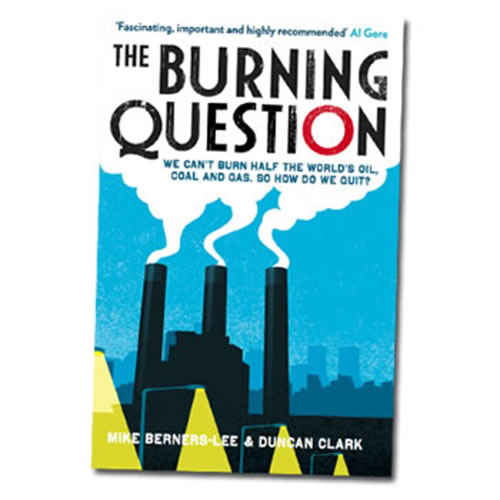
    The complex issues surrounding this debate are probably some of the most significant facing politicians, business leaders and you today. If you want to know more about this subject an excellent place to start is the 2013 book ‘The Burning Question’ by Mike Berners-Lee (brother of Tim) and Duncan Clarke (ISBN 978 – 1781250457).

    bqcoverbig


    Our pick of last month’s noteworthy announcements is as follows;

    Church of England ( May 11th 2015) announced it will sell investments worth £12m in firms where more than 10% of revenue comes from extracting thermal coal or the production of oil from tar sands. The Church said it had a “moral responsibility” to act on environmental issues to protect the poor, who were the most vulnerable to climate change. The Church manages three investment funds worth about £8bn.

    Unilever CEO Paul Polman (May 18th 2015) says in advance of a major business leaders meeting in Paris “If we don’t tackle climate change we won’t achieve economic growth,”. Polman has called on world leaders to raise their game in the battle against climate change saying governments must set clear CO2 targets to force low-carbon innovation.

    “It’s clear that, increasingly, the business community is aware of the costs of climate change. Polman said Unilever had faced business costs €300m-to-€400 million (£216m-to-£316m) higher than normal due to extreme weather. Momentum is swinging towards people realising that we need to take urgent action to stay below two degrees [increase in global average temperature],” Mr Polman told BBC News.
    US National Oceanic and Atmospheric Administration (Noaa) (May 10th 2015) announced that global CO2 concentrations have reached 400 parts per million (ppm) for the first time in 2 million years. To put this in context pre industrial revolution CO2 levels were approx. 280 ppm.

    Tesla (1st May 2015) The electric car company Tesla has announced its entry into the energy market, unveiling a suite of low-cost solar batteries for homes, businesses and utilities, “the missing piece”, it said, in the transition to a sustainable energy world.

    The batteries, launched in May at a Tesla facility in California by the company’s ambitious founder, Elon Musk, heralded the technology as “a fundamental transformation in how energy is delivered across the Earth”. The batteries will initially be manufactured at the electric car company’s factory in California, but will move production to its planned “gigafactory” in Nevada when it opens in 2017. The Nevada facility will be the largest producer of lithium-ion batteries in the world, and it is hoped its mass-production scale will help to bring down costs even further. More on this here.

    Ali Al-Naimi’s (Saudi Arabia’s Oil Minister) ( May 21st 2015) “In Saudi Arabia, we recognise that eventually, one of these days, we’re not going to need fossil fuels,” said Naimi in Paris 21st May 2015. “I don’t know when – 2040, 2050 or thereafter, so we have embarked on a program to develop solar energy. Hopefully, one of these days, instead of exporting fossil fuels, we will be exporting gigawatts of electric power.”

    Naimi also said he did not think that continuing low crude oil prices would make solar power uneconomic: “I believe solar will be even more economic than fossil fuels.”

    The Global Warming Policy Foundation (GWPF) (May 18th 2015). In the interest of fairness we are pleased to report that Charles Moore, a former editor of The Daily Telegraph, has joined the Board of Trustees of Nigel Lawson’s GWPF. Nigel thinks 95% of the world’s scientific community are wrong. We think they will get on well.

  • Latest Integrated Solar Panels Installation

    Latest Integrated Solar Panels Installation

    In May we installed our first integrated solar panels using the GBSol ‘Roof Integrated System’. In the ‘RIS’ system the 4mm glass laminates are manufactured separately from the supporting aluminium framework.  This enables non standard roof shapes to be accommodated and helps to maximise the area of roof available for solar PV.

    In this installation the array comprised of 9 laminates, 6 x 250W and 3 x 125.

    The first stage of the installation involves fixing of the aluminium framework to the roof  which is fabricated with a rebate to accommodate the 4mm laminates. The laminates are then secured in place via a riveted capping strip.

    This system has been designed and installed to sit flush with the zinc roof of this bespoke ‘self build’ in north west London.

    The array, with its different wattage panels required the use of the Solaredge inverter system which is ideally suited to arrays in which the output of panels may vary.

    If you are interested in any of the integrated solar PV we can install please give us a call on 0800 0025833.

  • Thumbs Up from Vince Cable

    Thumbs Up from Vince Cable

    Twickenham MP and Government Business Secretary Vince Cable recently paid a visit to an innovative solar PV system we recently installed. Dr Cable gave the installation his seal of approval stating  ‘my party is committed to delivering a low carbon economy and it is fantastic to see SogoSolar, a local solar panel company, deliver affordable and sustainable solutions.’ This Building Integrated PV (BIPV) system was designed with the client as part of a loft conversion. By working closely with the client and the loft conversion company we were able to ensure that both the desire to maximise natural light and to maximise energy generation were achieved. We are very pleased with the finish on this exacting install and are especially delighted that Vince Cable paid us a visit to give his support to both us as a local business, and to the solar PV sector as a whole. This is believed to be only the second such installation in London in which affordable, off the shelf products, have been used to integrate Velux windows into a solar array.  Up until now such a system would have required an expensive architect designed solution. The system gives the whole installation an integrated appearance and cleverly incorporates Velux windows into the recent loft conversion. SogoSolar completed the installation in late 2014 and invited Mr Cable to visit the completed array for a quick site survey during February. The 2.1kWp system uses LG Solar modules, SolarEdge Power Optimisers and a SolarEdge Inverter which allows the new system owner Karen to monitor individual module and overall system performance online on a regular basis. The modules, power optimisers and inverter components were supplied by BayWa r.e. Solar Systems and the integrated mounting system from French manufacturer IRFTS were supplied by All Eco Energy Ltd. Speaking after the install Karen said: “I am thrilled with the result. I had spent considerable time researching the market and was delighted when I came across Ben and the integrated solar panel and Velux system.“I have gained an extra liveable room, the ability to generate my own electricity as well as cutting my bills. Ben also provided me a web based product enabling me to see exactly how much electricity each panel and the whole system generates.” Ben Saunders added: “

  • Building Integrated Solar PV Systems

    Building Integrated Solar PV Systems

    Building integrated solar PV systems are often considered a more aesthetically acceptable option for installing solar. We offer a wide range of either ‘in roof’ or ‘integrated’ solar pv systems to meet these concerns.

    velux-solar


    ‘In roof’ and ‘integrated’ solar PV systems are those in which the solar PV array itself forms the weatherproofing barrier of the roof, and as such, they replace the conventional tiles or slates. Such systems are aesthetically more sensitive and are often specified in locations where planning restrictions precluded the use of traditional framed modules installed ‘above’ the roof.

    More about in roof and integrated solar PV systems >


  • East – West Systems: The Benefits

    East – West Systems: The Benefits

    For installations on flat roofs, how about installing the system using an east/west orientation rather than south facing. Are there any benefits ?

    It turns out that there are a number of benefits as follows;

    Increased Yield: According to German manufacturer Renusol, an east / west system can generate around 30 percent more solar power than south-facing systems fitted to flat roofs of the same size. This is due to lower angles of inclination that allow the solar modules to be fitted without any gaps between the rows, meaning that roof space is put to full use. While south-facing solar installations require their rows of modules to be spaced further apart to avoid shadows being cast by the modules and causing yield losses, in east/west installations solar modules can be fitted more tightly together on roofs often at inclinations of around ten degrees.

    This means that on a roof area of 12 x 30 metres, for example, 126 modules can be installed as opposed to 88. At a module output of 250 watts peak (Wp), the entire system produces an output of 31.5 kilowatts peak (kWp) in comparison with 22 kWp. The annual yield of an east/west installation is approximately 24,000 kilowatt hours (kWh), making it some 30 percent higher than that of south-facing systems, which only generate around 18,000 kWh of electricity a year.

    Increased Self Consumption: In addition to the benefit of the additional annual yield, an east / west system will generate less of a peak at midday when energy demand is typically lower, but will see higher generation rates early in the morning and later in the evening when demand can often be higher.

    Reduced Ballast Requirement: East / West systems tend to be interlocking such that the whole array becomes one big unit, and as such provide more resistance to wind. Therefore, for any given situation, less additional ballast is required to overcome the lift forces.

    All of the above results in a system that generates more energy, increases self consumption, places less stress on the roof and uses less ballast. From a clients perspective this makes an east / west system more financially attractive.


    There are a number of manufacturers supplying east / west systems and we have recently installed such a system from German manufacturer Renusol, namely the FS10 system,  at a school in Sandhurst. This 9kWp system, comprising 36 REC250W modules and occupying just 60m2, was installed in a single day and required no additional ballast.

  • Emsworth, Hants Solar Panels

    Emsworth, Hants Solar Panels

    In March 2014 we completed an unusual installation in Emsworth, Hants. Using a couple of detached garages we installed 12 REC 250W panels using a bespoke mounting system comprising K2 components. View the datasheet

    Emsworth Hants solar panels

    Emsworth, Hants Solar Panels Installation – Technical specification

    Brand: REC No. of panels: 12 Facing: South Postcode: PO

    About SogoSolar

    We are specialists in the design and installation of solar panel systems for domestic and commercial customers in  Hants, Surrey, London and the South East. We know that investing in solar energy remains one of the smartest decisions you could make today. However, we also know that you may have questions or concerns before making the decision.

    Looking good

    We know many of you are put off solar by its appearance. Here at SogoSolar we specialise in ‘integrated’ solar roofs which offer a much more sympathetic alternative. With ‘In roof’ and ‘integrated’ systems, the solar PV array itself forms the weatherproofing barrier of the roof, and as such, they replace the conventional tiles or slates. Such systems are often specified in locations where planning restrictions preclude the use of traditional framed modules installed ‘above’ the roof.

    Designed for you 

    At SogoSolar all our systems are bespoke – designed specifically for your property. In addition, we only use components from manufacturers with UK or EU based support teams. This in turn means that we are much better placed to support you, our customer.

    Peace of mind

    All our installations come with an insurance-backed 5 year workmanship warranty, plus a comprehensive after care service, which includes monitoring system performance for two years from installation. This has proved a valuable feature for many of our customers, enabling them to monitor the output of individual panels, as well as their overall energy usage.

    Money matters

    Solar remains a smart financial investment, with over half a million households in the UK taking advantage of the financial benefits possible. Owners of solar PV systems receive a tax-free income for all the extra energy they generate for 20 years from installation. Not only do they earn money, but also save money on their bills when using the energy generated within their property. Plus, installation costs have more than halved over the last few years, and can give returns of between 10% to 12% for domestic installations.

    No call centres here!

    If you prefer to know exactly who you are dealing with, you have come to the right place. We offer an honest, transparent, old fashioned approach, in which you will always deal direct with experienced professionals. If you’d like to find out more do please give us a call. We’d love to hear from you!